微服务缓存实战
微服务下缓存实践是一个很大的话题,本文主要关注缓存和数据库的交互方式以及缓存一致性的讨论。
交互方式
cache aside
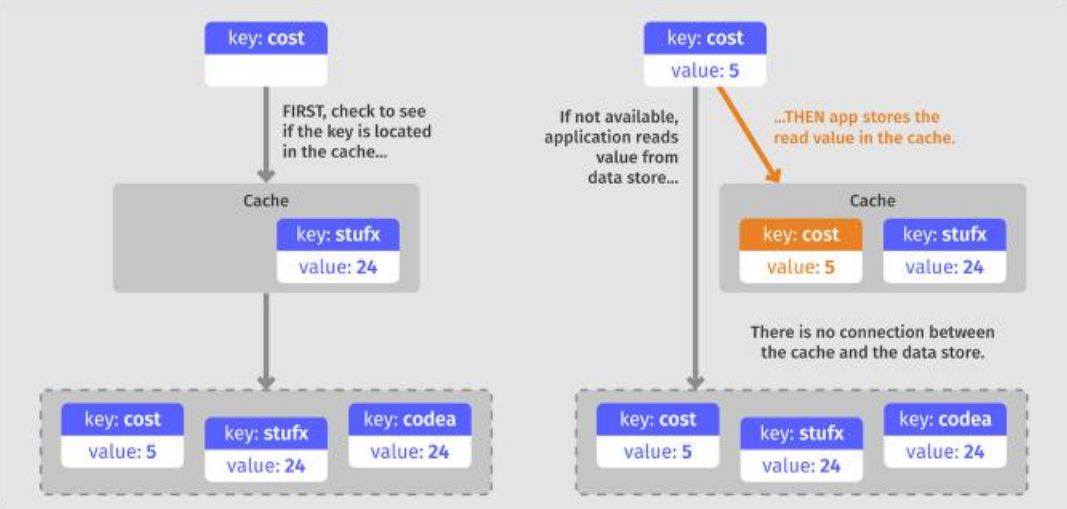
最常见的交互方式,由业务方直接操作缓存和数据库,维持两者的一致。
注意
写数据时先更新数据库,然后清空对应缓存,这种方式优于覆盖缓存,造成不一致的概率较低
write through
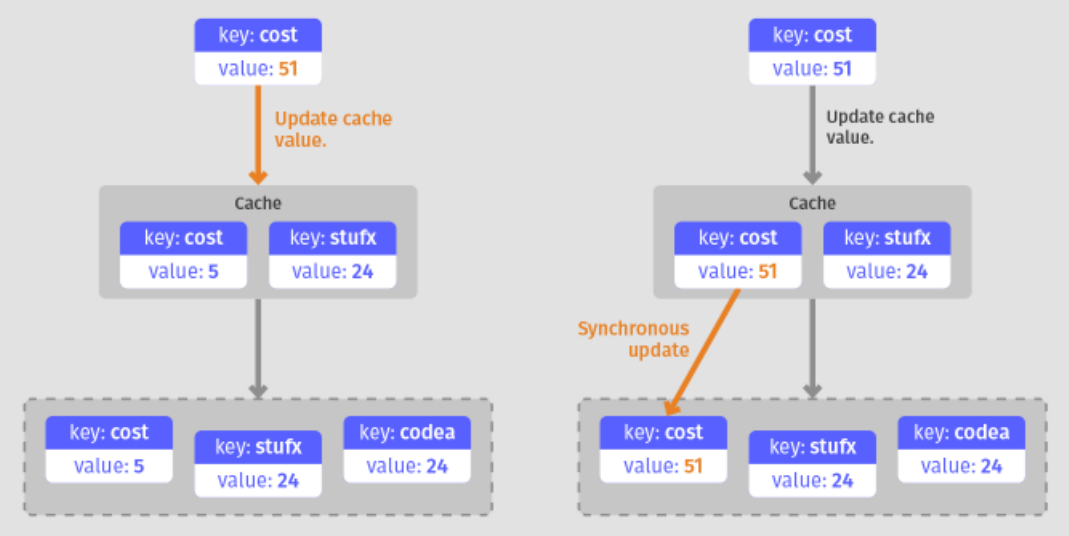
将缓存置于数据库之前,由缓存负责更新数据库,而不是业务方。
write back
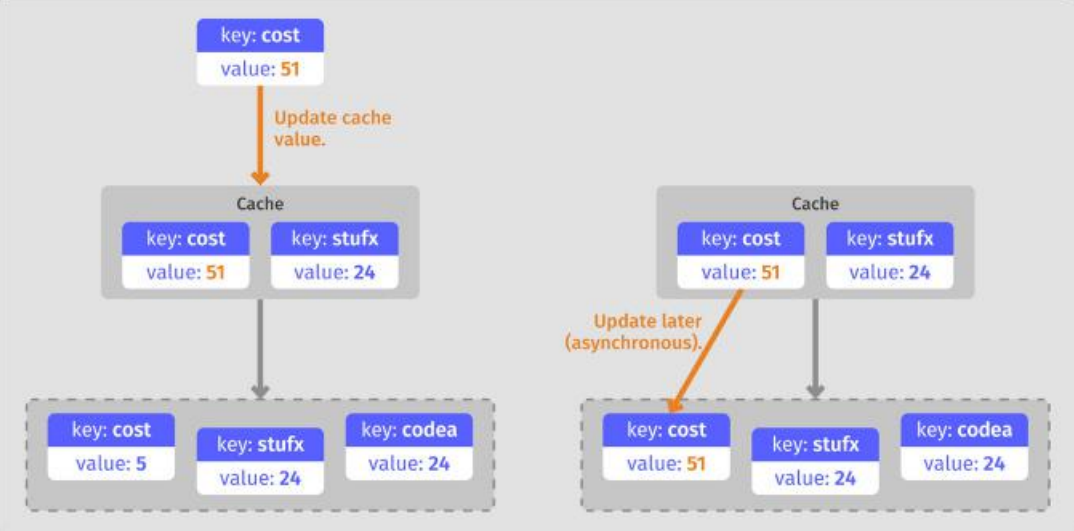 和write through类似,区别在于异步更新数据库。
缓存一致性
首先必须澄清这里缓存一致性的概念,缓存和数据库中的数据在物理上当然不可能随时都一致,我们能做到的有以下几点
- 提供统一的访问层,例如write through/back的方式,屏蔽业务层对数据库的感知,当然这样需要缓存做更多的工作
- 提供最终一致性方案,在业务可接受的时间内,达到缓存和数据库的一致
- 针对极端情况做优化
我们先研究基本的cache aside
cache aside
项目准备
- 克隆
https://github.com/cafewang/cache-chemist.git,使用Idea导入 - jdk版本为17
- 项目框架为springboot,包含web、jpa、redis模块
- 使用k3d部署Kubernetes集群,包含mysql和redis,分别映射主机的8082和8081端口
- 主机需安装docker和k3d环境,以创建集群
- 使用前运行
deployment/deploy.bat,linux系统也可运行其中内容
表结构如下
| id | name | age |
|---|---|---|
| 1 | bob | 10 |
redis中存储了name/age的kv结构,即bob/10。
cache aside实现如下
// CacheAsideService
public Long getAge(String name, Long sleep) {
    String ageStr = stringRedisTemplate.opsForValue().get(name);
    if (Objects.nonNull(ageStr)) {
        return Long.parseLong(ageStr);
    }
    Person person = personService.getByName(name);
    try {
        Thread.sleep(sleep);
    } catch (InterruptedException e) {
        throw new RuntimeException(e);
    }
    if (Objects.isNull(person)) {
        return null;
    }
    String newAgeStr = person.getAge().toString();
    stringRedisTemplate.opsForValue().set(name, newAgeStr, Duration.of(1, ChronoUnit.MINUTES));
    return person.getAge();
}

public Long getAge(String name) {
    return getAge(name, 0L);
}

public void addPerson(Person person) {
    personService.save(person);
    stringRedisTemplate.opsForValue().getAndDelete(person.getName());
}

public void updateAge(String name, Long age) {
    personService.updateAge(name, age);
    stringRedisTemplate.opsForValue().getAndDelete(name);
}
更新操作都是删除缓存,而不是更新缓存。
下面看看如下流程
- 插入记录
1/bob/10,删除bob对应缓存 - 查询缓存为空,查询数据库并更新缓存
bob/10 - 更新记录为
1/bob/12,删除bob对应缓存 - 查询缓存为空,查询数据库并更新缓存
bob/12
// CacheChemistApplicationTests
	@Test
	void testCacheAside() {
		String name = "bob";
		Long age = 10L;
		cacheAsideService.addPerson(new Person(1L, name, age));
        Assertions.assertNull(stringRedisTemplate.opsForValue().get(name));
		Assertions.assertEquals(age, cacheAsideService.getAge(name));
		Long newAge = 12L;
		cacheAsideService.updateAge(name, newAge);
		Assertions.assertNull(stringRedisTemplate.opsForValue().get(name));
		Assertions.assertEquals(newAge, cacheAsideService.getAge(name));
	}
下面查看异常流程
- 插入记录
1/bob/10,删除缓存 - 查询缓存为空,查询数据库得到
bob/10,由于GC或线程调度,线程暂停了1s- 在这1s中,另一个线程更新记录为
1/bob/12,删除缓存,然后查询缓存为空,查询数据库,更新缓存为bob/12
- 在这1s中,另一个线程更新记录为
- 线程继续执行,更新缓存为
bob/10,出现数据不一致
	@Test
	void testCacheAsideCornerCase() {
		String name = "bob";
		Long age = 10L;
		cacheAsideService.addPerson(new Person(1L, name, age));
		CompletableFuture<Void> future1 = CompletableFuture.runAsync(() -> cacheAsideService.getAge(name, 1000L));
		Long newAge = 12L;
		CompletableFuture<Void> future2 = CompletableFuture.runAsync(() -> {
			cacheAsideService.updateAge(name, newAge);
			cacheAsideService.getAge(name);
		});
        try {
            future1.get();
			future2.get();
        } catch (InterruptedException | ExecutionException e) {
            throw new RuntimeException(e);
        }
		Assertions.assertEquals(age, cacheAsideService.getAge(name));
		Assertions.assertEquals(newAge, personService.getByName(name).getAge());
    }
用流程图表示
sequenceDiagram
    participant t1 as Thread1
    participant t2 as Thread2
    participant r as redis
    participant m as mysql

    note over m: 记录 1/bob/10
    note over r: 缓存为空
    t1->>r: 查询bob,返回空
    t1->>m: 查询bob,返回 1/bob/10
    activate t1
    note over t1: GC pause for 1s
    t2->>m: 更新记录为 1/bob/12
    note over m: 记录 1/bob/12
    t2->>r: 删除缓存
    t2->>r: 查询bob,返回空
    t2->>m: 查询bob,返回 1/bob/12
    t2->>r: 更新缓存为 bob/12
    note over r: 缓存为 bob/12
    deactivate t1
    t1->>r: 更新缓存为 bob/10
    note over r: 缓存为 bob/10
虽然异常场景发生的概率不高,一旦发生,只有脏数据再次被更新,数据才会一致,这个时间可能长达几个小时甚至几天,解决方式如下
- 采用定时跑批的形式,重点数据分钟级别或者小时级别更新到缓存,全量数据周级别更新到缓存,保证最终一致性
- 参考dtm项目的缓存一致性方案
dtm cache
dtm cache是cache aside的改进方案。
其本质是在缓存上加上限时锁,每个锁请求通过uuid(由owner字段表示)区分
- 获得锁的查询线程,可以在锁周期内查库并更新缓存,这样锁周期被分为两个部分,缓存未更新和已更新
- 如果缓存有数据,则异步查库并更新缓存,先返回旧数据
- 缓存无数据,则同步查库并更新缓存,返回新数据
- 更新缓存先判断owner是否变更,未变更说明未过期或没有新的锁请求,可以更新缓存,然后释放锁,已变更说明有别的查询线程获得了锁,这时重新执行查询流程
- 未获得锁的查询线程,查到数据直接返回,查不到则等待一段时间(短于锁限时)再次尝试获取锁
缓存采用hash存储(即java中的Map),结构为 - data,缓存的内容,有独立的过期时间,应大于锁限时
- owner,即锁id,通过uuid生成
- lockUntil,表示锁限时
这样不会出现并发更新缓存的情况,而且锁过期后,一旦有新的查询线程获取到锁,原查询线程会放弃更新缓存,不会导致旧数据更新缓存。
数据库更新时,过期缓存对应的锁(lockUntil设为0),使得下次查询触发异步更新。
需要注意锁限时的设置,需要比查库+更新缓存时间更长,以免还没查询完锁就过期,时间也不能过长,导致其他查询线程等待时间太长。
数据过期时间需要比锁限时长,否则会导致数据在锁限时内过期,查询线程重复等待的情况发生。
我们来看看核心的代码实现
// DtmService
public Long getAge(String name, Long sleep) {
  CacheStatus cacheStatus;
  while (Objects.isNull((cacheStatus = getAndLock(name, 50)).getData())
          && Objects.isNull(cacheStatus.getNewLock())) {
    try {
      Thread.sleep(10);
    } catch (InterruptedException e) {
      throw new RuntimeException(e);
    }
  }
  String newLock = cacheStatus.getNewLock();
  if (Objects.nonNull(newLock)) {
    if (Objects.isNull(cacheStatus.getData())) {
      FetchResult fetchResult = fetchData(name, newLock, sleep);
      return fetchResult.getSuccess() ? fetchResult.getData() : getAge(name);
    }
    CompletableFuture.runAsync(() -> fetchData(name, newLock, sleep));
  }
  return cacheStatus.getData();
}
getAndLock通过lua脚本完成两个操作,获取data以及尝试获取锁,如果获取到锁会返回锁的uuid
- data为空且未获取到锁(其他查询线程持有锁),则等待10ms再尝试
- 获取到锁,如果数据为空,则同步查库并更新缓存,更新成功则返回,更新失败(锁被修改)则重新查询
- 获取到锁,数据不为空,则返回数据,异步更新缓存
- 未获取到锁,但是有数据则直接返回
来看下面两个测试场景
// CacheChemistApplicationTests
	@Test
	void testDtm() throws InterruptedException {
		String name = "bob";
		Long age = 10L;
		dtmService.addPerson(new Person(1L, name, age));
		Assertions.assertEquals(age, dtmService.getAge(name));
		Long newAge = 12L;
		dtmService.updateAge(name, newAge);
		Assertions.assertEquals(age, dtmService.getAge(name));
		Thread.sleep(100);
		Assertions.assertEquals(newAge, dtmService.getAge(name));
		stringRedisTemplate.opsForHash().delete(name, "data", "owner", "lockUntil");
	}
- 首次查询同步更新缓存,查询到新插入数据
- updateAge将锁过期,后续查询返回旧数据,但是触发了异步更新缓存
- 等待100ms后缓存更新,查询到新数据
再看一下corner case
	void testDtmCornerCase() throws InterruptedException {
		String name = "bob";
		Long age = 10L;
		dtmService.addPerson(new Person(1L, name, age));
		CompletableFuture<Void> future1 = CompletableFuture.runAsync(() -> dtmService.getAge(name, 1000L));
		Long newAge = 12L;
		CompletableFuture<Void> future2 = CompletableFuture.runAsync(() -> {
			dtmService.updateAge(name, newAge);
			dtmService.getAge(name);
		});
		try {
			future1.get();
			future2.get();
		} catch (InterruptedException | ExecutionException e) {
			throw new RuntimeException(e);
		}
		Assertions.assertEquals(newAge, personService.getByName(name).getAge());
		Assertions.assertEquals(newAge, dtmService.getAge(name));
		stringRedisTemplate.opsForHash().delete(name, "data", "owner", "lockUntil");
	}
- 首个查询线程查库后暂停了1s,更新缓存是发现锁被修改,所以没有更新,而是重新查询
- 第二个查询线程等待锁过期后获取到锁,更新缓存成功,缓存中存的是新数据
用时序图来描述
sequenceDiagram
    participant t1 as Thread1
    participant t2 as Thread2
    participant r as redis
    participant m as mysql

    note over m: 记录 1/bob/10
    note over r: 缓存为空,锁过期
    t1->>r: 查询到数据为空,获得锁lock_t1,限时50ms
    t1->>m: 查询bob,返回 1/bob/10
    activate t1
    note over t1: pause for 1s
    t2->>m: 更新记录为 1/bob/12
    note over m: 记录 1/bob/12
    note over r: 缓存为空,锁lock_t1过期
    t2->>r: 查询到数据为空,获得锁lock_t2,限时50ms
    t2->>m: 查询bob,返回 1/bob/12
    t2->>r: 更新缓存为 bob/12
    note over r: 缓存为 bob/12,锁为lock_t2
    deactivate t1
    t1->>r: 更新缓存失败,重新查询
生产环境中实现Dtm需要注意以下几点
- 锁限时、未获取到锁的等待时间、数据过期时间设置需参考业务场景和数据库、缓存性能
- 需要使用lua脚本,保证redis操作的顺序性
- 需要根据业务场景,选择是否缓存空数据
总结
本文介绍了在微服务中实现缓存一致性的方案,cache aside一般是基础方案,dtm可以提供更强的一致性,不会出现旧数据覆盖新数据的情况。
如果要保证最终一致性,还可以通过定时跑批补偿、领域事件、binlog异步更新作为补充,以更新时间作为版本,防止旧数据覆盖新数据。